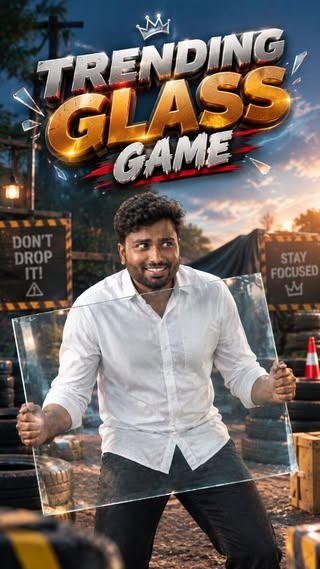
The Ultimate Masterclass on Mastering the Trending Glass Carrying Game
Why the Trending Glass Carrying Game is Taking Over Social Media Feeds Everywhere
Over the past few months, as I have scrolled through my analytics dashboard, reviewing content trends across YouTube Shorts, Instagram Reels, and TikTok, one particular phenomenon has completely dominated the algorithm: the Trending Glass Carrying Game. When I first encountered this challenge in my feed, I honestly thought it was just another fleeting, two-day internet fad that would vanish by the weekend. But as a creator who has spent years studying audience retention, digital psychology, and viral mechanics, I quickly realized there is much more beneath the surface of this seemingly simple trend.
The game itself appears deceptively straightforward on the surface. Players are challenged to transport a glass filled to the absolute brim with liquid—usually water or colorful beverages—across various obstacles, using unconventional methods, body parts, or custom-built balancing contraptions, all without spilling a single drop. Yet, when you look at the engagement metrics, the comment sections, and the sheer volume of duet and remix videos being pumped out by creators worldwide, you begin to understand why this specific challenge has captured the global imagination. It combines high-stakes tension with everyday household objects, creating a recipe for instant entertainment that appeals equally to Gen Z users, millennial parents, and even older audiences who love a good old-fashioned display of physical dexterity.
As someone who loves experimenting with new digital trends and breaking down why certain formats succeed while others fail, I knew I had to dive deep into this phenomenon. I spent an entire week testing different variations of the challenge, analyzing the physics behind successful runs, studying the camera angles used by top creators to maximize suspense, and even filming a few attempts for my own community. What I discovered surprised me. Far from being a mindless viral trick, mastering the Trending Glass Carrying Game requires genuine concentration, spatial awareness, an understanding of momentum, and a great deal of patience.
In this comprehensive editorial guide, I am going to share everything I have learned through my hands-on testing and creator research. Whether you are a content creator looking to boost your reach, a party organizer searching for the ultimate icebreaker game, or simply someone who wants to beat their friends at the next weekend hangout, this guide will walk you through the history, the mechanics, the physics, the safety precautions, and the ultimate winning strategies for the Trending Glass Carrying Game. Let us dive right in and explore how you can take your glass-carrying skills from clumsy amateur to absolute viral champion.
Tracing the Origins and Explosive Rise of the Glass Carrying Challenge
To truly understand how the Trending Glass Carrying Game became a global digital sensation, we need to take a step back and examine how modern internet culture operates. Viral trends do not happen by accident; they are carefully engineered by a combination of human psychology, platform algorithms, and the innate desire for community participation. When this challenge first popped up in regional creator circles, it started as a humble backyard party game. Families and college friends were sitting around, looking for ways to pass the time with whatever props were readily available in the kitchen.
Someone grabbed a drinking glass, filled it with water, placed it on an unstable surface—perhaps the back of a hand, a wooden spoon held between the teeth, or even balanced precariously on top of a smartphone—and challenged the person next to them to walk across the room without spilling. Someone whipped out their phone, hit record, captured a hilarious spill that resulted in a massive splash all over a friend's new shoes, and uploaded it with an upbeat, trending audio track. Within hours, that initial video hit tens of thousands of views. Within days, creators with millions of followers began putting their own unique spin on the format, scaling up the difficulty with larger glasses, blindfolds, outdoor obstacle courses, and high-speed movements.
From a digital creator's perspective, the success of the Trending Glass Carrying Game comes down to three fundamental pillars: visual tension, low barrier to entry, and high reward for humor. First, visual tension is one of the most powerful hooks in digital video production. When a viewer sees a glass filled to the absolute brim wobbling on the edge of a spoon, their brain instantly locks onto the screen. They want to see what happens next. Will the player make it, or will the water go flying? This psychological hook ensures that average view duration—a critical metric for platforms like YouTube and Instagram—skyrockets.
Second, the barrier to entry is virtually zero. You do not need expensive studio lighting, professional camera gear, or specialized gaming rigs to participate. All you need is a glass from your kitchen cabinet, some tap water, and a smartphone to record the action. This accessibility invites millions of ordinary users to try the challenge themselves, fueling a massive wave of user-generated content that feeds the algorithm exponentially. Finally, the humor factor provides the ultimate payoff. Whether the player succeeds with breathtaking precision or fails spectacularly with water splashing directly into their face, the audience is guaranteed a satisfying emotional release. It is relatable, clean, funny, and endlessly repeatable.
Breaking Down the Core Mechanics and Variations of the Game
When you decide to jump into the Trending Glass Carrying Game, you quickly realize that there is no single, rigid rulebook. Just like traditional folk games that evolve as they travel from town to town, this digital challenge has morphed into dozens of distinct variations, each testing different physical skills and coordination levels. During my extensive testing phase, I tried out nearly every major variation floating around the internet, and I want to break them down for you so you can choose the right style for your skill level or your content creation goals.
The Classic Spoon-and-Teeth Balance Test
This is the purist's version of the game and arguably the most recognizable format across social media feeds. The rules are beautifully simple: you take a standard dining spoon, place the handle firmly between your teeth, balance a small glass or teacup filled with water right on the bowl of the spoon, and attempt to walk a predetermined distance—usually around ten to fifteen feet—without using your hands to steady the glass.
In my personal experience, this variation looks deceptively easy until you actually try it. The moment you take your very first step, every single vibration from your foot striking the floor travels directly up your spine, through your jaw, and straight into the spoon. If your jaw is too tense, the glass chatters and tips over. If your jaw is too loose, the spoon sags, and the water spills backward. Success in this variation relies almost entirely on micro-adjustments of your neck muscles, slow and deliberate heel-to-toe walking, and keeping your eyes fixed firmly on a stable point straight ahead rather than staring directly at the glass.
The Back-of-the-Hand Agility Challenge
If you want to test your hand-eye coordination without relying on your jaw muscles, the back-of-the-hand variation is the ultimate test. In this version, players must balance a heavy glass filled with liquid on the flat back of one hand while keeping their arm extended or held at a specific angle. To make things even more challenging, many creators introduce a walking component where you have to navigate around chairs, step over small obstacles, or even complete a 360-degree spin before crossing the finish line.
When I tested this variation, I found that arm stability and wrist flexibility are everything. If your wrist twitches even a millimeter, the centrifugal force or tilt angle causes the water to surge over the rim. Creators who dominate this category often utilize subtle counter-movements with their opposite arm, using it as a counterbalance just like a tightrope walker uses a long pole. It is a brilliant visual spectacle for video because it looks graceful when executed properly, but it provides instant comedic relief when it inevitably goes wrong.
The Extreme Obstacle Course Speed Run
For advanced players and creators looking to maximize engagement through high-energy content, the obstacle course variation is where the game truly shines. This version takes the basic glass-carrying concept and supercharges it by adding physical hurdles, narrow pathways, stepping stones, and sometimes even timed pressure. Players are timed as they carry a brimming glass through a living room transformed into an indoor jungle gym.
This is where safety becomes a top priority, which I will discuss in detail shortly. Filming an obstacle course run requires careful planning. You need to ensure that the floor is free of sharp objects, that fragile furniture is pushed safely out of the way, and that you are wearing supportive footwear to prevent slips and falls. The payoff, however, is immense. When a creator successfully sprints, ducks, and weaves through a complex course while keeping a glass completely intact, the audience reaction in the comments is filled with genuine awe and respect.
The Physics of Fluid Dynamics and Balancing a Full Glass
As a technology educator and someone who loves geeking out over the underlying science of everyday phenomena, I could not write a guide about the Trending Glass Carrying Game without examining the fascinating physics at play. Many participants treat the game purely as a test of luck or steady hands, but understanding the actual fluid dynamics involved can drastically improve your success rate and turn you into an undefeated champion among your friends.
When you fill a glass with water right to the brim, you are dealing with a physical property known as surface tension. Water molecules love sticking to each other through hydrogen bonding, which creates an invisible, elastic-like skin across the surface of the liquid. This is why you can actually fill a glass slightly above the physical rim without it immediately spilling over, forming a glorious, curved dome of water. However, the moment external kinetic energy—like a heavy footstep or a sudden jerk of the hand—is introduced, that delicate surface tension is easily disrupted.
Sloshing is the primary enemy in the glass-carrying game. When you walk, your body moves up and down in a sinusoidal wave pattern. This rhythmic motion matches the natural resonant frequency of the liquid inside the glass. If your walking pace happens to synchronize with the natural sloshing frequency of the water, the waves inside the glass amplify each other constructively. Within just three or four steps, small ripples turn into massive tidal waves that crash over the rim, resulting in an immediate fail.
To counteract this natural physics problem, successful players employ specific techniques. First, adopting a ninja walk—where you roll your foot smoothly from heel to toe and slightly bend your knees to absorb vertical bounce—drastically reduces the kinetic energy transferred into the glass. Second, choosing the right vessel makes a massive difference. Taller, narrower glasses tend to cause faster, more violent sloshing because the liquid has less horizontal surface area to distribute energy across, whereas wider, heavier-bottomed glasses offer a more stable center of gravity. When you combine the right vessel with proper body mechanics, you are no longer fighting the physics of the water; you are working in harmony with them.
Creator Secrets: How to Film and Edit Your Challenge for Maximum Virality
If you are reading this guide because you want to create your own viral video featuring the Trending Glass Carrying Game for Instagram Reels, YouTube Shorts, or TikTok, you need more than just good balancing skills. You need a rock-solid production strategy. The digital landscape is fiercely competitive, and viewers have an attention span of roughly two seconds before they swipe away to the next piece of content. Here is my exact playbook for capturing and editing a challenge video that grabs attention and holds it all the way to the final frame.
Setting the Stage and Camera Angles
Lighting and framing are your best friends when filming physical challenges. Never shoot your video in a dark room with harsh, unflattering backlighting. Set up your camera or smartphone on a sturdy tripod in a brightly lit room with natural daylight streaming in if possible. Clean up the background clutter so the viewer's eye is not distracted by messy laundry or random objects on the floor.
When it comes to camera angles, dynamic placement is key. Instead of locking the camera in a static, distant wide shot that makes the challenge look boring, consider using a close-up tracking shot. If you have a friend helping you film, have them slowly back up while keeping the camera focused tightly on the glass and your hands or face. This creates an intense, cinematic perspective that puts the viewer right in the middle of the action. You can also use a low-angle shot looking up at the player to make the challenge look more heroic and dramatic.
The Power of the Hook and Sound Design
In short-form video content, the first three seconds dictate your success. Do not waste time with long, rambling introductions explaining what you are about to do. Start your video right at the moment of tension—perhaps a close-up of water being poured right to the absolute brim, followed immediately by the player taking their first nerve-wracking step. Add bold, clean on-screen text with an engaging hook such as, "Can I beat the impossible glass challenge?" or "My friend said this was easy, so I made it impossible."
Sound design is another crucial element that many beginner creators overlook. Do not rely solely on raw audio of room noise. Layer in a trending, high-energy instrumental audio track or a suspenseful beat that matches the rhythm of your footsteps. As you walk, amplify the subtle sounds of your breathing or add a satisfying chime sound effect right when you successfully cross the finish line. If you fail, a well-timed comedic sound effect or abrupt cut can turn a frustrating moment into pure comedic gold that viewers will love sharing in their group chats.
Essential Safety Precautions and Practical Tips for Everyday Players
While the Trending Glass Carrying Game is lighthearted, fun, and designed for entertainment, safety should always come first. Whenever you mix moving around with glass vessels and slippery liquids, accidents can happen. Over the course of my testing and community observation, I have seen a few minor mishaps—mostly shattered glass on kitchen floors and soaked socks—that could easily have been avoided with a little common sense and preparation.
Before you set up your challenge course or start filming, take a few moments to review these essential safety guidelines:
- Choose the Right Material: If you are a beginner, practicing with actual heavy glass vessels can be risky if you drop them. Consider using thick plastic cups or acrylic drinkware during your initial practice sessions. Once you master your balance and want to level up for the camera, you can switch to real glass for that authentic, high-stakes visual appeal.
- Clear Your Workspace: Never play this game in an area cluttered with sharp furniture corners, electrical cords, or valuable electronics. If you are doing an obstacle course run, ensure the floor is completely dry and free of slipping hazards before you take your first step.
- Wear Appropriate Footwear: Avoid playing barefoot or wearing slick socks on hardwood or tile floors. Wear comfortable sneakers with good grip to ensure you have complete stability with every step you take.
- Protect Your Eyes and Face: If you are attempting extreme variations—such as balancing heavy objects or incorporating sudden movements—be mindful of splashing liquid getting into your eyes or hot/cold temperature extremes if you are using specialized beverages.
- Have Fun and Don't Take It Too Seriously: Remember that the primary goal of the Trending Glass Carrying Game is to laugh, connect with friends, and enjoy the creative process. If you spill water all over yourself on the first try, lean into the humor and share the blooper with your audience. Some of the most viral videos on the internet are the ones where everything goes completely wrong!
Frequently Asked Questions About the Trending Glass Carrying Game
What is the Trending Glass Carrying Game and where did it start?
The Trending Glass Carrying Game is a viral social media challenge where participants attempt to transport a glass filled to the brim with liquid across a distance or through obstacles without spilling. It originated organically as a backyard party game before rapidly spreading across platforms like TikTok, Instagram Reels, and YouTube Shorts through creator remixes and community participation.
Do I need special equipment to participate in this challenge?
Not at all! One of the main reasons for the trend's massive popularity is its accessibility. All you need is a standard drinking glass, some water or liquid of your choice, and a smartphone to record your attempt. Some players use props like dining spoons or balancing trays, but these can easily be found in any standard household kitchen.
How can I stop the water from sloshing and spilling while I walk?
Sloshing happens when your walking rhythm matches the natural resonant frequency of the water. To minimize spills, practice a "ninja walk" where you roll your foot smoothly from heel to toe, bend your knees slightly to absorb vertical bounce, and keep your body relaxed. Choosing a wider vessel and filling it just slightly below the extreme edge can also give you a better margin for error.
Is it safe to use real glass cups for this challenge?
While real glass creates a more visually dramatic and authentic video, it does carry a minor risk of breakage if dropped. If you are a beginner, practicing with sturdy plastic or acrylic cups is recommended. If you do use real glass, ensure you are playing in a clear area away from sharp furniture and always wear proper footwear.
What are the most popular variations of the game on social media?
Some of the most popular variations include the classic spoon-in-teeth balance test, the back-of-the-hand agility challenge, and extreme indoor obstacle course speed runs. Creators often add blindfolds, timer pressure, or complex navigation paths to make the challenge harder and more entertaining for viewers.
How can I make my video of the challenge go viral?
To maximize your chances of going viral, focus on three things: a strong visual hook in the first three seconds, dynamic camera angles (like close-up tracking shots), and engaging sound design using trending audio tracks. Keep your video fast-paced, lean into the humor of inevitable spills, and encourage your viewers to try the challenge and tag you in their own attempts.